
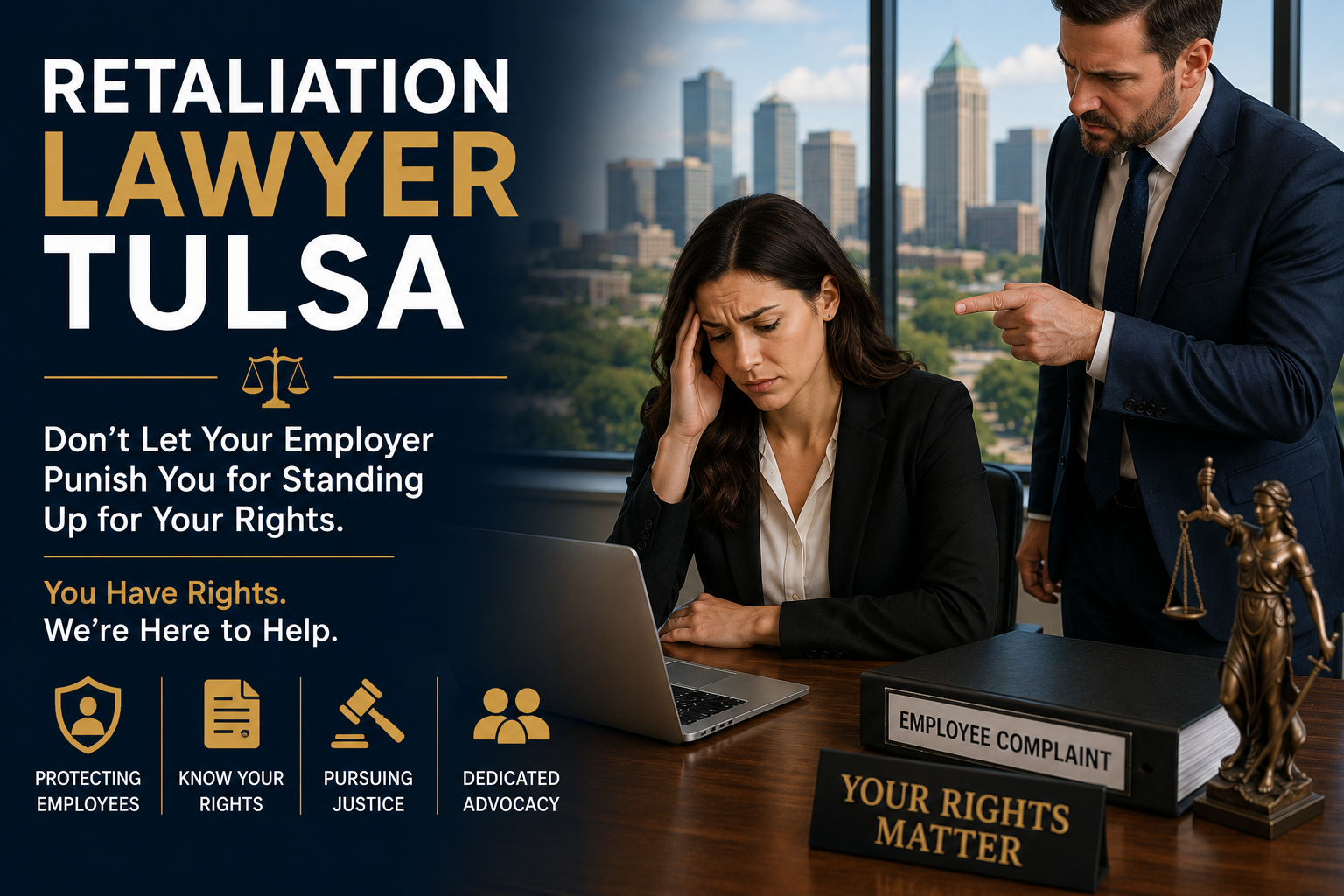
Retaliation Lawyer Tulsa | Protecting Employees from Illegal Workplace Retaliation
Retaliation Lawyer Tulsa
Employees should not have to fear losing their jobs or facing punishment simply because they exercised their legal rights. Unfortunately, workplace retaliation remains one of the most common reasons employees seek legal advice. If you were fired, demoted, disciplined, harassed, or otherwise treated unfairly after reporting unlawful conduct or participating in a protected activity, you may have legal rights under Oklahoma and federal employment laws.
At Employment Lawyers Tulsa OK, we help employees understand whether the actions taken against them may constitute unlawful workplace retaliation. While employers are generally free to make legitimate business decisions, they cannot retaliate against employees for engaging in activities that the law protects.
Whether you reported discrimination, complained about sexual harassment, requested a reasonable accommodation, exercised your rights under the Family and Medical Leave Act (FMLA), reported wage violations, or participated in a workplace investigation, retaliation by an employer may violate state or federal law.
What Is Workplace Retaliation?
Workplace retaliation occurs when an employer takes adverse action against an employee because that employee engaged in a legally protected activity.
Protected activities often include:
- Reporting workplace discrimination
- Reporting sexual harassment
- Filing or participating in an Equal Employment Opportunity Commission (EEOC) complaint
- Reporting wage and hour violations
- Requesting a reasonable accommodation for a disability
- Requesting protected medical leave
- Reporting workplace safety concerns
- Cooperating in an internal investigation
- Serving as a witness in another employee’s complaint
- Reporting unlawful or unethical conduct
The law encourages employees to report unlawful workplace practices without fear of punishment. When an employer retaliates against an employee for exercising these rights, legal remedies may be available.
What Is Considered an Adverse Employment Action?
Retaliation is not limited to termination. Employers may retaliate in many different ways, some of which are subtle and develop over time.
Examples of adverse employment actions may include:
- Termination or wrongful discharge
- Demotion
- Reduction in pay
- Loss of bonuses or commissions
- Unfavorable schedule changes
- Reduced work hours
- Denial of promotions
- Unjustified disciplinary actions
- Negative performance evaluations without legitimate justification
- Reassignment to less desirable duties
- Suspension
- Harassment after filing a complaint
- Creating working conditions that pressure an employee to resign
Not every negative employment decision is illegal. However, when adverse treatment occurs because an employee exercised a protected legal right, an experienced retaliation lawyer in Tulsa can evaluate whether unlawful retaliation may have occurred.
Why Retaliation Cases Can Be Difficult to Prove
Unlike some employment disputes, retaliation cases often involve employers who claim their actions were based on legitimate business reasons rather than an employee’s protected activity.
For example, an employer may argue that an employee was terminated because of poor performance, attendance issues, restructuring, or violations of company policy. Determining whether retaliation actually occurred often requires a careful review of the facts, including:
- The timing of the adverse action
- Performance evaluations before and after the protected activity
- Emails and text messages
- Internal complaints
- Witness statements
- Personnel records
- Company policies
- Communications between supervisors and management
In many cases, the timeline becomes one of the most important pieces of evidence. When an employee with a positive work history suddenly experiences discipline or termination shortly after reporting unlawful conduct, it may raise important legal questions that deserve careful evaluation.
Understanding how to identify and preserve evidence early can significantly affect the strength of a potential retaliation claim.
Laws That Protect Employees from Workplace Retaliation
Several federal and Oklahoma laws prohibit employers from retaliating against employees who exercise protected legal rights. While the specific protections vary depending on the circumstances, the purpose of these laws is the same—to encourage employees to report unlawful conduct without fear of punishment.
Depending on the facts of your case, retaliation protections may arise under laws involving:
- Employment discrimination
- Sexual harassment
- Disability discrimination
- Family and Medical Leave Act (FMLA) rights
- Wage and hour violations
- Workplace safety complaints
- Whistleblower protections
- Military service protections
- Other state and federal employment laws
An employer cannot lawfully punish an employee simply because they exercised rights protected by these laws. Even if an employer ultimately prevails on the underlying complaint, retaliation for making a good-faith complaint may still violate the law.
Understanding which laws apply to your situation is an important first step in evaluating a potential retaliation claim.
Common Examples of Workplace Retaliation
Retaliation can occur in virtually any workplace and often happens shortly after an employee exercises a protected legal right. Sometimes the retaliation is immediate. In other cases, it develops gradually through a pattern of unfair treatment.
Examples of workplace retaliation may include:
- Being fired after reporting workplace discrimination
- Receiving negative performance reviews after filing a complaint
- Being denied a promotion following an EEOC charge
- Losing overtime opportunities after reporting wage violations
- Being reassigned to undesirable shifts or locations
- Having job duties significantly reduced
- Being excluded from meetings or important projects
- Receiving unwarranted disciplinary write-ups
- Being subjected to increased scrutiny that is not applied to other employees
- Being threatened for cooperating in an investigation
- Being pressured to resign after reporting unlawful conduct
Retaliation does not always involve a single dramatic event. In many situations, employees experience a series of actions that together create an intimidating or hostile work environment.
Warning Signs That Retaliation May Have Occurred
Employees often ask whether what happened to them was simply an unfortunate coincidence or unlawful retaliation.
Although every case is different, certain warning signs may indicate retaliation, including:
- A sudden change in how management treats you after making a complaint
- Discipline that begins only after engaging in protected activity
- Supervisors making negative comments about your complaint
- Unequal enforcement of company policies
- Being excluded from opportunities you previously received
- Sudden reductions in pay, hours, or responsibilities
- Increased monitoring without a legitimate reason
- Termination shortly after reporting illegal conduct
No single factor automatically proves retaliation. However, when several of these circumstances occur together, they may warrant a closer legal review.
Evidence That Can Strengthen a Retaliation Claim
Strong documentation can play a significant role in employment retaliation cases. Employers often maintain that adverse actions were based on legitimate business reasons, making objective evidence especially valuable.
Helpful evidence may include:
- Emails and text messages
- Written complaints made to supervisors or human resources
- Performance evaluations
- Employee handbooks and workplace policies
- Disciplinary notices
- Attendance records
- Payroll records
- Witness statements
- Internal investigation documents
- Calendars or timelines showing the sequence of events
Employees should also consider keeping a written journal documenting important workplace events, including dates, conversations, and the names of individuals involved. A detailed timeline can help establish the relationship between the protected activity and the employer’s actions.
Employees should never remove confidential company information they are not legally authorized to possess. Instead, preserving lawfully obtained documents and communications can help an attorney evaluate the facts while avoiding unnecessary legal complications.
Why Timing Often Matters
One of the most important factors in many retaliation cases is timing. Courts and investigators frequently examine how closely an adverse employment action followed the employee’s protected activity.
For example, if an employee receives years of positive performance reviews but is terminated only days or weeks after reporting discrimination, requesting protected medical leave, or cooperating in an investigation, that timing may become an important piece of evidence.
Timing alone does not establish retaliation. However, when combined with inconsistent explanations, unequal treatment, or other supporting evidence, it may help demonstrate that retaliation—not legitimate business reasons—motivated the employer’s decision.
An experienced retaliation lawyer in Tulsa can evaluate the complete timeline, review available evidence, and help determine whether you may have a valid employment retaliation claim.
What Should You Do If You Believe You Are Being Retaliated Against?
If you believe your employer is retaliating against you, the actions you take in the days and weeks that follow can be important. While every situation is different, preserving evidence and understanding your legal rights early may strengthen your ability to evaluate a potential claim.
Employees who suspect retaliation should consider:
- Keeping a written timeline of important events
- Saving emails, text messages, and other communications they are legally entitled to retain
- Maintaining copies of performance evaluations and disciplinary notices
- Documenting changes to work schedules, job duties, or compensation
- Recording the dates of complaints made to supervisors or Human Resources
- Identifying coworkers who may have witnessed relevant events
- Reviewing employee handbooks and company policies
- Speaking with an employment attorney before signing severance agreements or other legal documents
It is also important to remain professional in the workplace. Avoid confrontations, continue performing your job duties to the best of your ability, and refrain from making statements on social media that could later be used against you.
Filing a Workplace Retaliation Claim
Many retaliation claims require employees to follow specific legal procedures before filing a lawsuit. Depending on the circumstances, this may involve filing a charge with the Equal Employment Opportunity Commission (EEOC) or another appropriate agency.
The process often includes:
- Filing a formal complaint
- Providing supporting documentation
- Allowing the employer an opportunity to respond
- Participating in mediation if offered
- Cooperating with an investigation
- Receiving a determination or a Notice of Right to Sue when applicable
Every case follows its own timeline, and the required procedures depend on the laws involved. Missing a filing deadline could affect your legal rights, making it important to seek legal guidance as soon as possible after retaliation occurs.
What Compensation May Be Available?
When unlawful retaliation is proven, employees may be entitled to remedies authorized by state or federal law. The available compensation depends on the facts of each case, and no attorney can promise a specific outcome.
Potential remedies may include:
- Back pay
- Lost wages
- Lost employment benefits
- Front pay
- Reinstatement to a former position when appropriate
- Compensation for emotional distress where permitted by law
- Attorney fees and litigation costs in qualifying cases
- Other relief authorized under applicable employment laws
The value of a retaliation claim depends on numerous factors, including the severity of the employer’s actions, the financial losses suffered, the available evidence, and the remedies provided by law.
Frequently Asked Questions About Workplace Retaliation
Can my employer fire me for reporting discrimination?
Generally, employers may not lawfully terminate an employee for reporting discrimination or participating in a discrimination investigation. While employers may still discipline employees for legitimate reasons, retaliation for engaging in protected activity may violate employment laws.
Is retaliation always termination?
No. Retaliation can take many forms besides firing an employee. Demotions, reduced hours, pay cuts, denial of promotions, unjustified discipline, unfavorable schedule changes, and creating a hostile work environment may all constitute retaliation under certain circumstances.
What if my employer says I was fired for poor performance?
This is one of the most common defenses employers raise. An attorney will often review your performance history, disciplinary records, communications, and the timing of events to determine whether the employer’s explanation is supported by the evidence or whether retaliation may have been a motivating factor.
Can I file a retaliation claim if my original complaint was not successful?
In many situations, yes. Employees are generally protected when they make complaints in good faith, even if an investigation ultimately concludes that no underlying violation occurred.
How long do I have to file a retaliation claim?
The applicable deadlines depend on the laws governing your claim. Because these deadlines can vary and missing them may affect your legal rights, it is important to speak with an employment attorney as soon as possible.
Why Legal Guidance Matters
Employment retaliation cases are often more complex than they initially appear. Employers frequently argue that adverse actions were based on legitimate business reasons rather than an employee’s protected activity. Evaluating these claims requires a careful review of documents, timelines, witness statements, company policies, and other evidence.
An experienced retaliation lawyer in Tulsa can help determine whether your circumstances may support a legal claim, explain the applicable laws, and guide you through the process of protecting your rights.
If you believe you have been subjected to workplace retaliation, obtaining legal advice early can help preserve evidence, avoid common mistakes, and ensure you understand the options available under Oklahoma and federal employment laws.
Workplace Retaliation Often Overlaps with Other Employment Law Claims
Retaliation frequently occurs alongside other workplace violations. An employee may initially report discrimination, harassment, unpaid wages, or safety concerns only to face adverse treatment afterward. In these situations, multiple legal claims may arise from the same set of facts.
Related employment law matters may include:
- Wrongful termination
- Workplace discrimination
- Sexual harassment
- Hostile work environment
- Disability discrimination
- Pregnancy discrimination
- Age discrimination
- Race discrimination
- Religious discrimination
- Family and Medical Leave Act (FMLA) violations
- Americans with Disabilities Act (ADA) claims
- Wage and hour disputes
- Whistleblower claims
As our Employment Lawyers Tulsa OK website continues to grow, these topics will be covered in greater detail to help employees better understand their rights and the legal protections available to them.
Choosing the Right Retaliation Lawyer in Tulsa
If you believe your employer retaliated against you for exercising your legal rights, choosing the right attorney is an important decision. Employment retaliation cases often involve extensive documentation, multiple witnesses, company policies, and detailed legal analysis.
When selecting a retaliation lawyer, consider whether the attorney:
- Focuses on employment law
- Understands Oklahoma and federal employment statutes
- Carefully reviews the facts before offering legal advice
- Communicates clearly throughout the legal process
- Explains both the strengths and potential challenges of your case
- Is committed to protecting employee rights
An attorney should provide an honest assessment based on the evidence rather than making unrealistic promises. Every retaliation case is unique, and the best legal strategy depends on the specific facts involved.
Frequently Asked Questions
Can my employer reduce my hours after I file a complaint?
In some circumstances, reducing an employee’s hours after they engage in protected activity may constitute unlawful retaliation. Whether the reduction violates the law depends on the facts, the employer’s reasons, and the applicable legal protections.
Can retaliation happen even if I still work for the company?
Yes. Many retaliation claims involve employees who remain employed. Retaliation may include reduced hours, undesirable work assignments, unfair discipline, denial of promotions, exclusion from meetings, or other adverse employment actions that negatively affect the employee’s terms and conditions of employment.
What if Human Resources ignored my complaint?
While an employer’s failure to act does not automatically establish retaliation, ignoring complaints or allowing retaliatory conduct to continue may become relevant when evaluating the overall circumstances of a case.
Should I quit if I believe I am being retaliated against?
That decision should be made carefully. Resigning may affect your legal rights and potential remedies. Before leaving your position, it is often beneficial to consult with an employment attorney to understand how your decision could impact a potential claim.
Serving Employees Throughout the Tulsa Area
Employment Lawyers Tulsa OK is dedicated to helping employees understand their workplace rights under Oklahoma and federal law. Whether you work in healthcare, manufacturing, education, retail, construction, energy, transportation, finance, technology, hospitality, or another industry, every employee deserves to work in an environment free from unlawful retaliation.
We assist employees throughout Tulsa and surrounding communities, including:
- Broken Arrow
- Owasso
- Bixby
- Jenks
- Sand Springs
- Sapulpa
- Glenpool
- Collinsville
- Skiatook
- Claremore
- Catoosa
- Coweta
- Tulsa County and nearby areas
Contact a Retaliation Lawyer in Tulsa
If you believe your employer punished you for reporting discrimination, harassment, wage violations, workplace safety concerns, or another protected activity, you may have important legal rights.
Understanding those rights begins with obtaining reliable legal guidance. An experienced retaliation lawyer can review your situation, explain the laws that may apply, answer your questions, and help you determine the most appropriate path forward.
Contact Employment Lawyers Tulsa OK to schedule a confidential consultation. We are committed to helping employees understand their rights, evaluating the facts of each case, and pursuing appropriate legal remedies when employers engage in unlawful workplace retaliation.
The sooner you seek legal advice, the sooner you can better understand your options and take informed steps to protect your career, your financial future, and your legal rights.

